Weathering the storm: how to cope with and get ahead in first year law!
Introduction
Departing from the familiar comforts of high school, known faces, predictable routines, and well-worn spaces, law school can feel like a dramatic shift. As the first semester begins, it may feel as though the roof has been lifted off what once felt stable. Support systems can quietly disperse, friends head in different directions, and even small things like unreliable transport or long parking hunts start to take a toll.
This transition is overwhelming.
The uncertainty, the workload, and the pressure to adapt quickly can make first year law feel like a storm. But with the right mindset and strategies, it is absolutely possible not just to survive, but to thrive. This article shares some key tips and considerations to help you stay balanced and get ahead.
Managing expectations
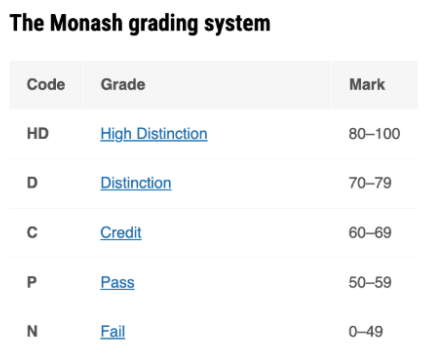
Monash’s Grading System
Many first year law students were high-achievers during their high school days , where strong grades were the norm. Receiving your first university results can therefore be quite a shock.
Do not stress.
This is completely normal. The standard for what constitutes a “good” grade changes significantly at university. A 70% is a Distinction (D), a result that may have felt disappointing in high school, but is now considered a strong achievement in University.
You may also notice a difference between your law subjects and the other half of your double degree. Law is intentionally rigorous, and it is designed to challenge you. While this can feel disheartening at times, it is important to remember that first year subjects count for less toward your overall WAM. Reflecting an understanding that students need time to adjust.
Think of the first year as a foundation year, one where growth, adaptation, and resilience matter just as much as results.
Mindfulness
Staying mentally balanced is essential in the first year, both for your wellbeing and your long-term success in the degree. Without intentional breaks, it is easy to feel overwhelmed or burnt out.
Make time for meaningful breaks and activities outside of law. These help reset your focus and maintain perspective.
This can include:
Picking up a job you enjoy
Joining a band or ensemble through the LSS
Participating in clubs and student activities
Getting involved with the LSS
Trying a new sport
Setting aside daily quiet time (15–20 minutes to reset)
Practising meditation
Taking naps when needed
Exploring hobbies like origami or creative outlets
Pushing yourself to try something unfamiliar
Even something simple, like a repetitive or “mindless” job, can provide a helpful mental break—especially when legal concepts start occupying your thoughts constantly.
Extra curriculars
Get involved early. The First year is the best time to explore opportunities, as the lower academic weighting gives you flexibility to try new things.
Some effective ways to build experience and connections include:
Securing a Legal Office Assistant role through networking or cold emailing
Joining the Law Ambassador Program
Building a professional presence on LinkedIn
Volunteering through MSA
Participating in groups like the Law Wind Ensemble
Cold emailing can feel intimidating, but it becomes much easier when approached authentically. Focus on reaching out to people with shared interests or experiences. At this stage, the goal is not just employment, but building relationships and learning from others.
Many professionals are happy to offer guidance, especially over informal coffee chats. Strong connections and mentorship can be just as valuable—if not more—than early work experience.
Settling in and finding your footing
Starting university can feel like stepping into a completely unfamiliar environment. Unlike high school, where routines were predictable and friendships already established, university brings a new level of uncertainty. During Orientation, it is common to feel unsure and even out of place, especially when it seems like everyone else has things figured out.
One early challenge is navigating systems like WES and understanding enrolment requirements. At first, even simple administrative tasks can feel confusing due to the amount of information available.
The physical campus can also take time to adjust to. What looks manageable on a map often feels much larger in reality, particularly when trying to locate unfamiliar classrooms.
Over time, however, things begin to settle. Getting involved in Law Students’ Society events can make a significant difference, helping you meet others who are experiencing the same challenges. These shared experiences build a sense of belonging and make the environment feel far less intimidating.
Academically, the reading load is often one of the biggest adjustments. It can initially feel overwhelming, but with time, you learn how to approach readings more efficiently and focus on what matters most.
10 things I wish I had known before law school
Imposter syndrome is common, and many students experience it. You are not alone, and support is available.
Everything feels overwhelming at first, but it becomes manageable with time and support. Monash’s academic support services can help: https://www.monash.edu/get-started/study-tips/academic-support
The readings are extensive, but efficiency improves over time. Focus on what your lecturer emphasizes rather than trying to master everything.
Plan ahead. Use a monthly calendar with assignment deadlines and set reminders at three, two, and one week intervals.
Legal writing requires a different way of thinking. Focus on reasoning, case comparison, and building a strong case bank.
Law Students’ Society study resources are valuable tools for understanding difficult content.
Get involved in clubs and activities to meet people and broaden your experience.
Make time for yourself each week, even if it is just a small activity you enjoy.
Say yes to opportunities, even when they feel intimidating—you never know where they might lead.
Enjoy the experience. University is important, but so are personal growth, travel, and pursuing your interests.
Mental Health Supports & Student Wellbeing
The first few weeks during law school can feel overwhelming and confusing. If you feel like everyone else has things figured out, they do not. It takes time to adjust, and there is a wide range of support available to help you through it.
On the academic side, Monash offers a Student Academic Success team that provides one-on-one consultations, workshops, and access to Learn HQ. These resources can help with time management, assessments, and academic writing. Booking even one session early can make a significant difference as the semester progresses.
It is important to recognise that feeling out of your depth in your first year is normal. Law school introduces new terminology, heavy reading loads, and unfamiliar expectations.
Beyond academics, Monash provides free counselling services with qualified professionals, including psychologists and psychiatrists. Appointments are available in person, online, and after hours. You do not need to wait until things feel severe—early support can be incredibly beneficial.
Peer support is equally important. Mentoring or buddy programs can connect you with more experienced students who understand what you are going through. Sometimes, simply hearing that others have faced the same challenges can be reassuring.
If you need support outside university, services like Lifeline (13 11 14) and Beyond Blue are available 24/7.
Build small breaks into your routine, avoid comparing yourself to more experienced students, and reach out for help early. Law school is a marathon, not a sprint—and taking care of yourself is a key part of succeeding.
Written by Bryan, Fatima, Tuhina and Thevesha